History of the Syrian Community
At the turn of the last century, some of the first Arab Americans to settle in Detroit were from Syria. The collapse of the silk industry in Syria prompted them to immigrate to America. It was the automobile industry and Henry Ford’s offer of $5.00 a day, which attracted the first Syrian immigrants to Detroit.
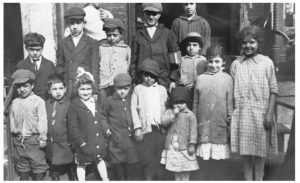
The Christians settled on Detroit’s east side in close proximity to the Jefferson Ave. assembly plant. Some of the early Syrian churches included St. George Antiochian Orthodox Church, Our Lady of Redemption Melkite Rite Catholic Church and Christ Episcopal Church.
The Muslims settled in Highland Park in close proximity to the Ford Model-T assembly plant. The first mosque established in the area was the Moslem Mosque.
After WWII, the second wave of immigrants was part of the “brain drain” from Syria and the Arab world. Most of these immigrants migrated for educational reasons and attended the University of Michigan, Michigan State University and Wayne State University.
During the 60’s and 70’s, most of the Syrian immigrants were professionals predominately from the medical and engineering fields.
The Syrian Club was founded in the mid-70’s as a social organization with the goal of bringing together members of the Syrian community. In 1996, the Syrian Club merged with the newly formed American Syrian Arab Cultural Association (ASACA).
Today, the Syrian Community in Michigan is approximately 27,000 people with several generations spanning over 100 years of migration to the area. Due to the ongoing conflict in Syria that started in March of 2011, the number increased with the waves of Syrian refugees admitted to the US since 2013. Per Detroit Free Press issue in Jan. 26, 2017, the numbers of Syrian refugees resettled in Michigan since Jan 2015 until now is 2,029 person. On Jan. 27, 2017, president Trump issued an Executive Order stopping the resettlement of Syrian refugees in the US!
The Future
ASACA has set ambitious goals regarding the promotion of Arab culture and the education of members and non-members. The organization also seeks to become a key organization among the myriad of Arab American organizations in the greater Detroit area.